
Extract → Produce → Use → Discard
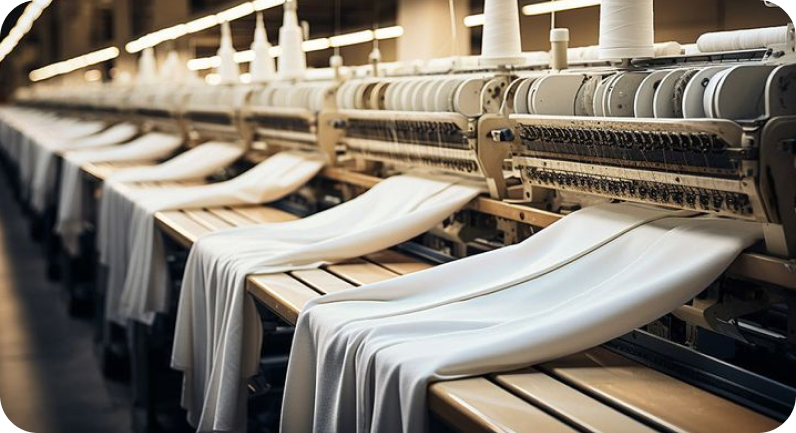
The global textile industry continues to operate within a linear production model. This model was developed to optimize scale and cost efficiency, not durability, traceability, or recovery. While it has enabled rapid global growth, it has also created a system that is increasingly incompatible with current environmental, regulatory, and industrial demands.
The issue is not marginal. It is systemic.
Global textile production exceeds 100 million tonnes annually, yet less than 1% of materials are recycled into new textiles (Ellen MacArthur Foundation, 2017). The majority of materials are lost after a single use cycle, with more than 85% ending up in landfill or incineration. This represents a systemic loss of value estimated at over 500 billion USD annually due to underutilization and lack of recovery (Ellen MacArthur Foundation, 2017).
At the same time, the industry contributes significantly to environmental pressure. Textile production accounts for an estimated 2–10% of global greenhouse gas emissions and consumes approximately 93 billion cubic meters of water annually (United Nations Environment Programme [UNEP], 2023; World Bank, 2019). These impacts are distributed globally, affecting supply chains, ecosystems, and resource availability across all regions.
Despite this scale, textile systems lack persistent data. Once materials enter circulation, their composition, usage, and condition are largely untracked, creating a structural loss of information across the lifecycle (European Environment Agency, 2020). This limits the ability to recover value, optimize performance, or verify sustainability claims.
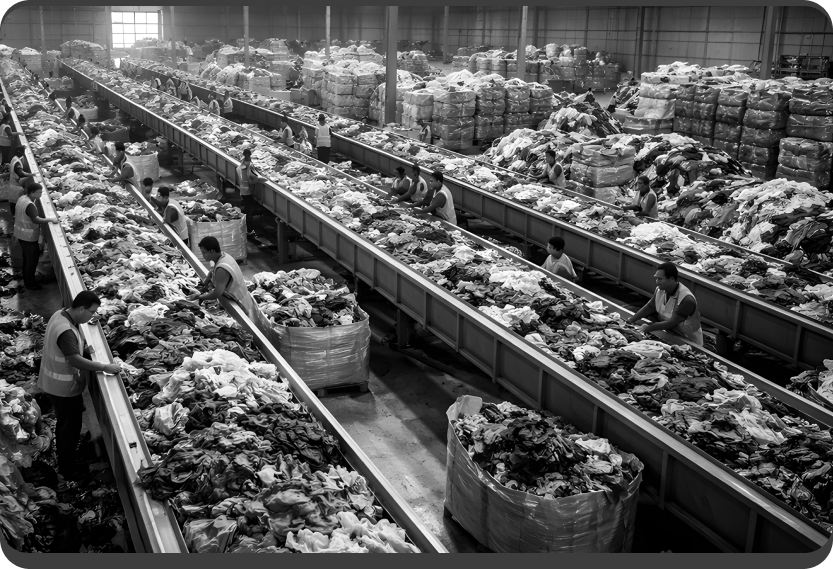
Regulatory frameworks are now enforcing a fundamental shift in how materials must be managed.
Across the European Union, policies such as the Ecodesign for Sustainable Products Regulation (ESPR), Digital Product Passports (DPP), and Extended Producer Responsibility (EPR) require traceability, lifecycle transparency, and accountability for end-of-life outcomes. Similar developments are emerging in the United States and other global markets. These frameworks introduce a new baseline: materials must be measurable, traceable, and verifiably compliant across their lifecycle.
The implications of this shift are immediate and localized.
Without integrated systems, organizations are required to implement fragmented solutions to meet regulatory requirements. This increases operational complexity and drives up costs through investments in reporting infrastructure, data systems, and compliance processes. At the same time, companies face growing exposure to regulatory penalties, restricted market access, and reputational risk.
In parallel, inefficiencies in material use continue to erode economic performance. The inability to recover materials, combined with rising raw material costs and supply chain volatility, creates long-term cost pressure. Organizations that fail to adapt risk losing both margin and market position.
Compliance is therefore no longer a sustainability initiative. It is a structural cost driver and a determinant of long-term competitiveness.

Current approaches attempt to address these challenges, but remain structurally limited.
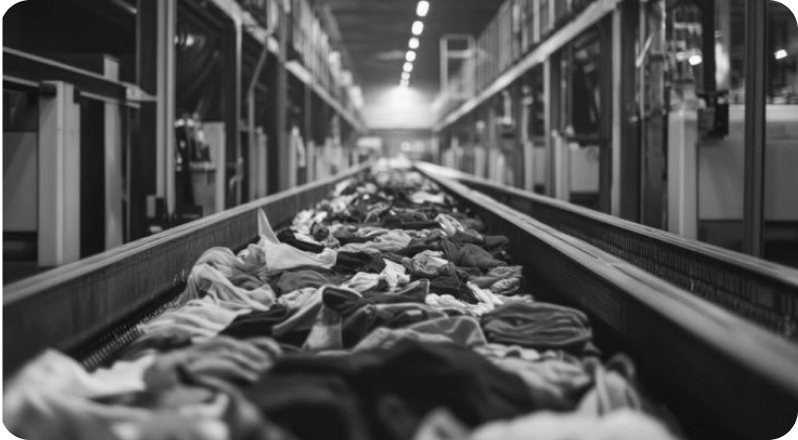
Recycling systems often rely on energy-intensive and chemically dependent processes that struggle to scale across global supply chains (European Environment Agency, 2020). Traceability solutions are typically implemented as external reporting layers, dependent on manual data input and disconnected from the material itself. These approaches do not preserve material identity or enable continuous lifecycle tracking.
As a result, textile systems remain fragmented and reactive. Materials lose identity after production, circularity cannot be verified at scale, and compliance becomes increasingly complex and costly. These limitations are not isolated inefficiencies, but symptoms of a system that was never designed to retain value across its lifecycle.
The limitation is not material performance. It is the underlying system design. Circularity cannot be added at the end of a product’s lifecycle. It must be designed into the system from the beginning.
Existing approaches are not solving the problem
Transforming Textiles develops infrastructure for textile systems designed for durability, traceability, and continuous recovery. This approach enables materials to retain identity over time, carry persistent data, and remain recoverable and reusable across multiple cycles.

Sense-Tex®
Sense-Tex is a patented smart-yarn technology that embeds functionality directly into the fiber. It enables material-level traceability, real-time performance insight, extended product lifespan, and compatibility with future fiber-to-fiber recovery systems.

Re:Weave™
Re:Weave is a circular textile systems architecture designed to recover and regenerate materials in structured closed loops. It transforms fragmented material flows into controlled cycles, enabling textiles to move from waste streams into continuous resource systems.
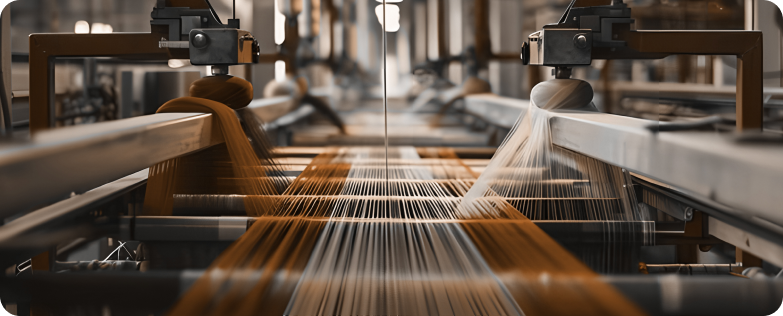
Textiles are not just consumer goods. They are infrastructure across critical sectors.
Defence & Aerospace
In defence, logistics and replacement cycles are major cost drivers. The global defence logistics market exceeds USD 200 billion annually, while in aerospace, maintenance and overhaul costs represent a substantial share of operating expenditure. Limited lifecycle visibility increases replacement frequency, maintenance burden, and operational risk.
Healthcare
Healthcare systems consume textiles at very high volume, and waste generation remains significant. WHO and related studies show that healthcare waste in high-income contexts can reach very high levels per bed or patient, adding cost in procurement, waste handling, and compliance. Without lifecycle control, reuse remains inefficient and textile flows remain poorly optimized.
Smart City Infrastructure
Municipal waste systems are already under growing pressure. The World Bank projects global waste generation to rise from 2.01 billion tonnes to 3.40 billion tonnes by 2050. Textile waste is one of the fastest-growing streams, increasing the cost burden on municipalities and infrastructure systems that are not designed for recovery at scale.
Fashion & Culture
The apparel market exceeds USD 1.7 trillion globally, yet the system remains structurally inefficient. Consumers buy more garments than in previous decades, use them for shorter periods, and the industry continues to lose substantial value through waste, unsold inventory, and lack of circular recovery.
The transition is already underway
Re:Weave addresses the root limitation of the textile system
Textiles should not function as disposable products. They should function as data-enabled, recoverable infrastructure designed to preserve value across their entire lifecycle.
The textile system is not only an environmental challenge it is deeply connected to livelihoods, local economies, and industrial resilience.
In many regions, textiles remain a critical economic backbone. In Kenya alone, the sector contributes approximately 14% of national employment, supports more than 2.5 million livelihoods, and generates annual revenues of around USD 564 million. This illustrates that inefficiencies in textile systems do not only result in environmental loss, but also directly affect income stability, employment, and regional economic development.
At the same time, real-world implementation of circular approaches is already demonstrating measurable benefits. Through UNEP’s InTex programme, textile SMEs across Kenya, South Africa, and Tunisia have achieved estimated annual outcomes including USD 4 million in cost savings, reductions of 5,100 tonnes of greenhouse gas emissions, a 10% decrease in hazardous chemical use, and an average waste reduction of 25%. These results show that improving how textile systems are designed and managed can simultaneously reduce environmental impact and strengthen business performance.
This reinforces a broader conclusion: the transition to circular textile systems is not only about sustainability compliance. It is about creating more resilient industries, more efficient resource use, and more stable economic outcomes across global and local contexts.
| Parameter | Linear System (Current) | Re:Weave System (Projected) | Impact |
|---|---|---|---|
| Material Utilization | < 1% fiber-to-fiber recycling | 30–70% recovery potential | + Value retention |
| Material Loss | ~85% lost after first use | Reduced through recovery loops | ↓ Waste cost |
| Annual Value Loss | ~$500B globally | Significantly reduced | + Recoverable revenue |
| Replacement Frequency | High (single/short lifecycle) | Reduced via extended lifespan | ↓ Procurement cost |
| Raw Material Dependency | High | Reduced via reuse | ↓ Exposure to price volatility |
| Compliance Cost | Increasing (fragmented systems) | Embedded in system design | ↓ Admin & reporting cost |
| Traceability | External / incomplete | Material-level embedded | ↓ Compliance risk |
| Operational Efficiency | Fragmented | Integrated lifecycle control | ↓ System inefficiency |
| Waste Handling Cost | Rising (municipal + industrial) | Reduced via circular flows | ↓ Disposal cost |
| Supply Chain Risk | High volatility | Increased resilience | ↓ Risk exposure |
| Cost Category | Linear System | Re:Weave System | Delta |
|---|---|---|---|
| Raw Material Cost | $10M | $6–8M | ↓ 20–40% |
| Waste & Disposal | $2M | $0.5–1M | ↓ 50–75% |
| Replacement / Reproduction | $8M | $4–6M | ↓ 25–50% |
| Compliance & Reporting | $1–2M | $0.5–1M | ↓ 30–60% |
| Total Lifecycle Cost | $21–22M | $11–16M | ↓ 30–50% |
Core Circular Economy & System Transition
Ellen MacArthur Foundation. (2013). Towards the circular economy: Economic and business rationale for an accelerated transition (Vol. 1, pp. 24–45). Ellen MacArthur Foundation.
Geissdoerfer, M., Savaget, P., Bocken, N. M. P., & Hultink, E. J. (2017).
The circular economy: A new sustainability paradigm?
Journal of Cleaner Production, 143, 757–768.
Kirchherr, J., Reike, D., & Hekkert, M. (2017).
Conceptualizing the circular economy: An analysis of 114 definitions.
Resources, Conservation and Recycling, 127, 221–232.
Recycling vs Circular Systems
Ghisellini, P., Cialani, C., & Ulgiati, S. (2016).
A review on circular economy: The expected transition to a balanced interplay of environmental and economic systems.
Journal of Cleaner Production, 114, 11–32.
Allwood, J. M. (2014).
Squaring the circular economy: The role of recycling within a hierarchy of material management strategies.
In E. Worrell & M. A. Reuter (Eds.), Handbook of Recycling (pp. 445–477). Elsevier.
Digital Platforms & System Efficiency
Porter, M. E., & Heppelmann, J. E. (2014).
How smart, connected products are transforming competition.
Harvard Business Review, 92(11), 64–88.
Bressanelli, G., Adrodegari, F., Perona, M., & Saccani, N. (2018).
The role of digital technologies to overcome circular economy challenges in manufacturing.
International Journal of Production Research, 56(1–2), 253–269.
Systems Thinking & Sustainability Performance
Meadows, D. H. (2008). Thinking in systems: A primer (pp. 1–240). Chelsea Green Publishing.
Stahel, W. R. (2016).
The circular economy.
Nature, 531(7595), 435–438.
Textile & Circular Innovation
Niinimäki, K., Peters, G., Dahlbo, H., Perry, P., Rissanen, T., & Gwilt, A. (2020).
The environmental price of fast fashion.
Nature Reviews Earth & Environment, 1(4), 189–200.
Ellen MacArthur Foundation. (2017).
A new textiles economy: Redesigning fashion’s future (pp. 18–35).